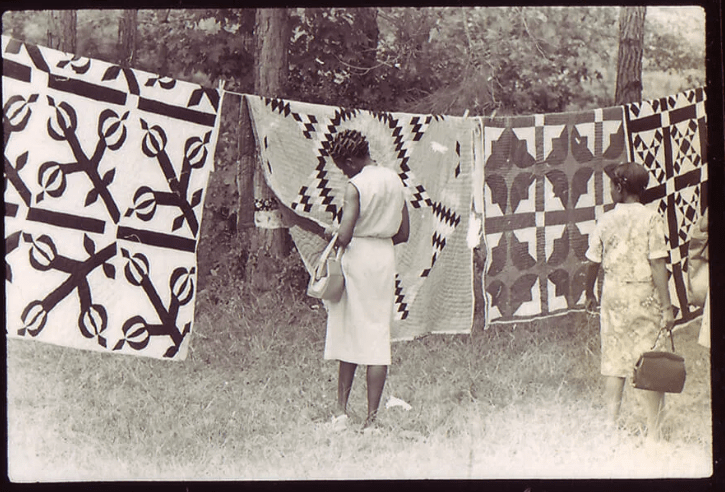
This post is part of an ongoing series highlighting modern and historical craftivists who inspire action through creativity.
If you’ve been around the quilting community — or even just wandered through Target last year (hi, 2024!) — you’ve probably heard of the famous Gee’s Bend quilters. I know I have, and I’ll devour any documentary about their incredible improvisational quilts. But until recently, I hadn’t heard of the related Freedom Quilting Bee — so today, I’m excited to share what I’ve learned about this amazing craftivist group!
The Freedom Quilting Bee was founded in 1966 in the quilting hotbeds of Gee’s Bend and Alberta, Alabama. It’s a powerful example of community empowerment and the efforts of the Civil Rights Movement. This cooperative used quilts as a form of mutual aid — selling their vibrant creations to support their families and fund civil rights efforts.
It wasn’t just about making quilts; it was about self-sufficiency, solidarity, and change.
Stitched in the Struggle
In the mid-1960s, many Black residents of Wilcox County, Alabama faced eviction and job loss simply for registering to vote. Amid this turmoil, local women took matters into their own hands — with fabric and thread.
With encouragement from Episcopal priest Francis X. Walter and leadership from organizer Estelle Witherspoon, they formed the Freedom Quilting Bee as a collective lifeline.
By March 1966, they were already sending quilts to New York City, where benefit auctions turned bedcovers into vital funding for their communities and civil rights initiatives.
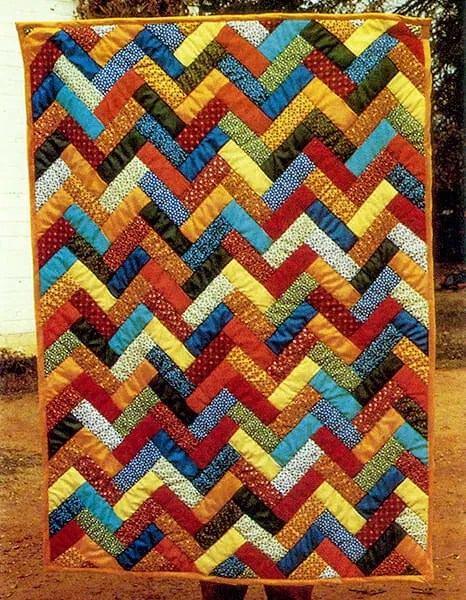
Creative Quilting, Every Scrap Counts
The Bee’s quilts, like the bold strip-pattern example above, were stitched from scraps of cloth — even faded jeans too worn for the cotton fields.
Many patterns were passed down through generations, but the quilters also improvised fearlessly, turning scarcity into a wellspring of creativity.
(Side note: I haven’t found many images specifically of Freedom Quilting Bee quilts, but there are many fine examples from Gee’s Bend online. I’ll link some sources below if you want to dive deeper.)
From Clotheslines to Museums
It wasn’t long before the art and fashion worlds took notice of the artistry and craft behind the Freedom Quilting Bee quilts. Elite department stores like Bloomingdale’s and Saks Fifth Avenue carried them. Vogue magazine’s legendary editor Diana Vreeland touted their stunning style. And they attracted the attention of influential artists and the Smithsonian Institution eventually put their handiwork on display. The quilts that once hung on humble clotheslines were now celebrated as fine art.
The Legacy Lives On
After 46 years of crafting and community-building, the original Freedom Quilting Bee closed its doors in 2012. But its spirit lives on. Today, a new generation carries the torch through the Freedom Quilting Bee Legacy, which continues to sew for empowerment and preserve this rich heritage in Alabama.
The Bee’s story isn’t just history — it’s a blueprint for craftivism.
Think about what you could create with scrap fabric, thrifted clothes, or commercial castoffs. The possibilities (and the potential to fund important causes) are endless. I know I have some ideas!
Further Reading About These Amazing Crafters
- Encyclopedia of Alabama – Freedom Quilting Bee
- Auburn University – Freedom Quilting Bee (Quilts of Gee’s Bend Project)
- Freedom Quilting Bee Legacy – Official History and Mission
- Freedom Quilting Bee Wikipedia Article
- Souls Grown Deep- Gee’s Bend
- The Quilts of Gee’s Bend: A Slideshow from the National Endowment for the Arts


 Fray Dikat Studio
Leave a comment